
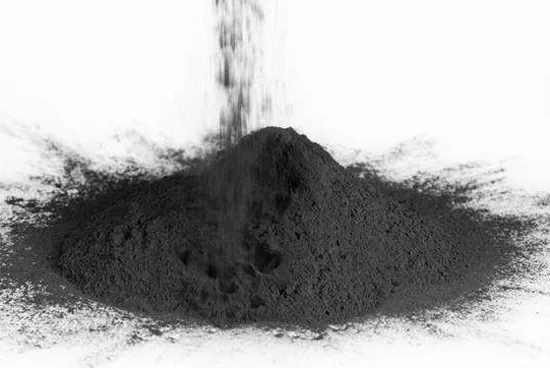
Battery-material processing is fundamentally a particle-engineering task. Cathode powders, graphite anodes and silicon-carbon materials require controlled size, distribution, morphology and purity so that later mixing, coating and cell manufacturing steps can remain stable.
For cathode materials, milling and air classification are commonly used to manage particle size distribution. The objective is not simply to make powder finer; it is to produce a consistent fraction that can be handled and formulated predictably. Dust-free feeding, efficient collection and controlled conveying are also important, because powder loss or contamination can affect both product quality and housekeeping.
Graphite anode materials add another requirement: particle shape. Grinding, spheroidization and classification can be combined to manage morphology and size distribution before downstream treatment. The best process route depends on the feedstock, target application and the balance required between yield, energy use and product specification.
An integrated powder process should therefore be evaluated from feeding through packaging. Magnetic separation, grinding, classifying, spheroidization, transport, metering and control systems need to work together. Stable operating conditions and repeatable process data are essential when a material moves from pilot testing to continuous battery-material production.